

Why losing women in Stem hurts PR and journalism too
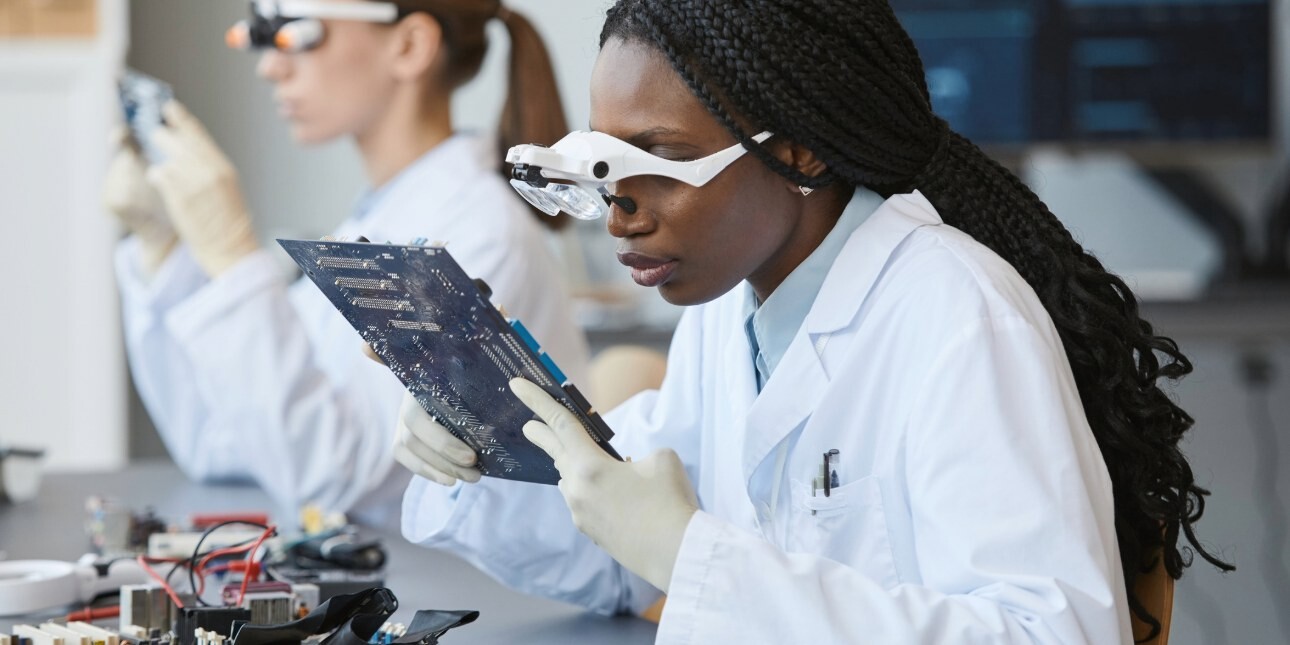
When women leave Stem careers, they vanish as subject matter experts and role models. This also affects journalists and PRs writing about science and technology.
When I hosted some of the CIPR Stem Group’s recent Stem Express webinars, which included three leading female B2B science and technology editors, I knew we would discuss the issue of women in Stem. It would have been impossible not to.
All three editors, Paige Hookway from Electronic Specifier, Laura Lansdowne from Technology Networks and Caroline Hayes from Electronics Weekly, have spent their careers highlighting the need for gender diversity in industries where women are often conspicuously absent. They’ve run awards programmes, written industry profiles and created platforms specifically to make women in Stem more visible and celebrate their contributions.
What emerged from our conversations was not only a clearer picture of the scale of the retention problem in the Stem sector as a whole, but also the knock-on effect on Stem journalism and PR.
Caroline Hayes has covered the electronics industry for over 30 years. She’s seen many talented women come and go over the course of her career: “There wasn’t, at one point, a problem in attracting women into the market, into our industry, but they weren’t being retained. They were moving off to do other things.”
How to retain women in Stem

There are a number of causes for the “leaky pipeline” of women leaving Stem careers. These include short term contracts, a lack of job security around maternity leave and building families, and confidence issues. The latter may be explained by Mary Ann Sieghart’s research in her book The Authority Gap, showing that women face more obstacles in the workplace than their male peers. Their competence is often challenged, their judgment in their area of expertise is questioned and they are routinely interrupted or spoken over.
Retention matters for obvious reasons. Women make up just 28% of the global STEM workforce and only 22% of AI professionals. We need more women in senior R&D roles, in engineering teams, designing the technologies that ultimately impact everyone’s lives. But it also matters for less obvious reasons: when women leave those technical roles, they disappear from the pool of expert sources that journalists and PR practitioners rely on.
As Paige Hookway puts it: “If women are missing from these Stem roles, they’re also missing as sources and role models and innovators in the media, and it’s the same in Stem journalism too. Representation really shapes the stories that get told.”
Hearing women's voices
It’s not just about numbers on diversity reports. It’s about whose voices get heard, whose innovations get coverage, whose perspectives shape how entire industries understand the challenges they need to solve.
But here’s where it gets more complicated. Some Stem-qualified women like Laura Lansdowne do move across to journalism or communications. Laura has a first-class honours degree in biology and worked in quality assurance within food laboratories as well as a human genetics research laboratory. She also undertook an additional qualification in clinical chemistry before moving into editorial roles in 2017. She became the managing editor of Technology Networks in 2021.
But if Laura was looking to transition into publishing today, the path might be somewhat more challenging.
“A lot of the publishing opportunities that you see nowadays have that caveat of ‘Essential requirement: PhD’. This can be frustrating [to see], because I do think that on-the-ground experience in various settings is as valuable as a PhD for some positions, and I don't really think that it should be seen as a negative if you haven't pursued that.”
Meanwhile, women like Paige Hookway land in Stem journalism through more convoluted routes. Paige studied English literature and “stumbled into” the electronics publishing industry over a decade ago, something she regards as beneficial because it enables her to “step back, look at the whole picture and think, well, what would I want to know as someone who doesn’t know much about this product?”
As for me, I didn’t have the means to go to university after school. I’m not a qualified engineer. And in my experience working for a deep-tech PR agency that specialised in electronics, that mattered. A lot. Even though I came from a journalism background, when I first said I wanted to write technical articles and press releases, I got the brush-off from my manager. Only senior company directors and freelance writers, all former electronics engineers and all men, were considered “capable” of writing technical content for the trade press.
Today, writing technical content is one of the main ways I make a living. I’m even a contributing editor for one of those electronics magazines. A rare specimen in my field, I got here through doggedly proving both clients and managers wrong every time they assumed that the subject matter would be too technical for me to understand.
Why are women leaving PR mid-career?
Like Stem, the PR industry also has a problem with retaining women. The CIPR’s recent Missing Women study identified nearly 4,000 female practitioners who left mid-career or were not promoted. Harassment and discrimination are the main reasons why we see fewer than half of senior roles are filled by women, compared to almost two thirds of junior and mid-level positions.
So, here’s how the cycle plays out: women often struggle to advance in Stem careers and leave, creating gaps in senior technical roles. PR professionals pitch the remaining, predominantly male, subject matter experts as spokespeople. Stem media coverage features mostly male voices. Young women see fewer role models. In the meantime, women trying to enter Stem journalism and PR without technical credentials face constant credibility challenges.
The three editors I spoke with are trying hard to break this pattern. Caroline Hayes features industry profiles of women who make significant contributions to the electronics industry and chairs the Women Leaders in Electronics Awards. The goal? “If you can see someone, you can aspire to be like them,” she explains. “It’s not about pushing men aside; it’s shining a light on women who may be in the shadows.”
Aside from being passionate about the need for greater gender and ethnic diversity in clinical trials, Laura Lansdowne is also vocal about what women need when they return from parental leave. “I don't think there's enough understanding around the physical, emotional, and mental challenges that are happening for that person when they go back… if there was consistent support and a more empathetic approach, people would be happier coming back.”
Women as spokespeople for Stem
As for Paige Hookway, she advocates for the “deliberate inclusion of [women] as sources and spokespeople in Stem stories – not just in diversity-themed features, but for any story that you’re telling. If there’s a female engineer who has helped design a product, I’d love to hear from her.”
That’s practical advice we PR professionals need to hear, especially when working on science and technology stories. We should always remember to ask, “who else worked on this project?” We should challenge all-male panels when we see them and not just accept the first name put forward as a spokesperson. More importantly, we need to feature women engineers and scientists in mainstream technical coverage, not just on International Women’s Day.
When women leave Stem, we lose sources, perspectives, innovation, and role models. And when women are prevented from reporting on or writing about Stem, it gets even worse. The cycle won't break until we accept that this isn't someone else's issue to solve. It affects all of us in the PR industry, and sitting between the media and industry, we are in exactly the right position to take action and do something about it.
Chartered PR practitioner Hajira Amla is an independent PR consultant with over 20 years’ experience in journalism, deep-tech B2B PR, marketing and content creation. She serves on the CIPR Council and as the CIPR Stem Group’s strategic advisor. Hajira is also a contributing editor at Elektor Magazine. Cision named her as one of its Top PR Experts and Influencers to Follow Right Now in 2025.
Further reading
Taylor Swift and the Lively-Baldoni saga: Testing moral brand consistency
The rise of fake experts is undermining trust in media
Beauty, health and wellness brands can’t thrive without smart PR and marketing