

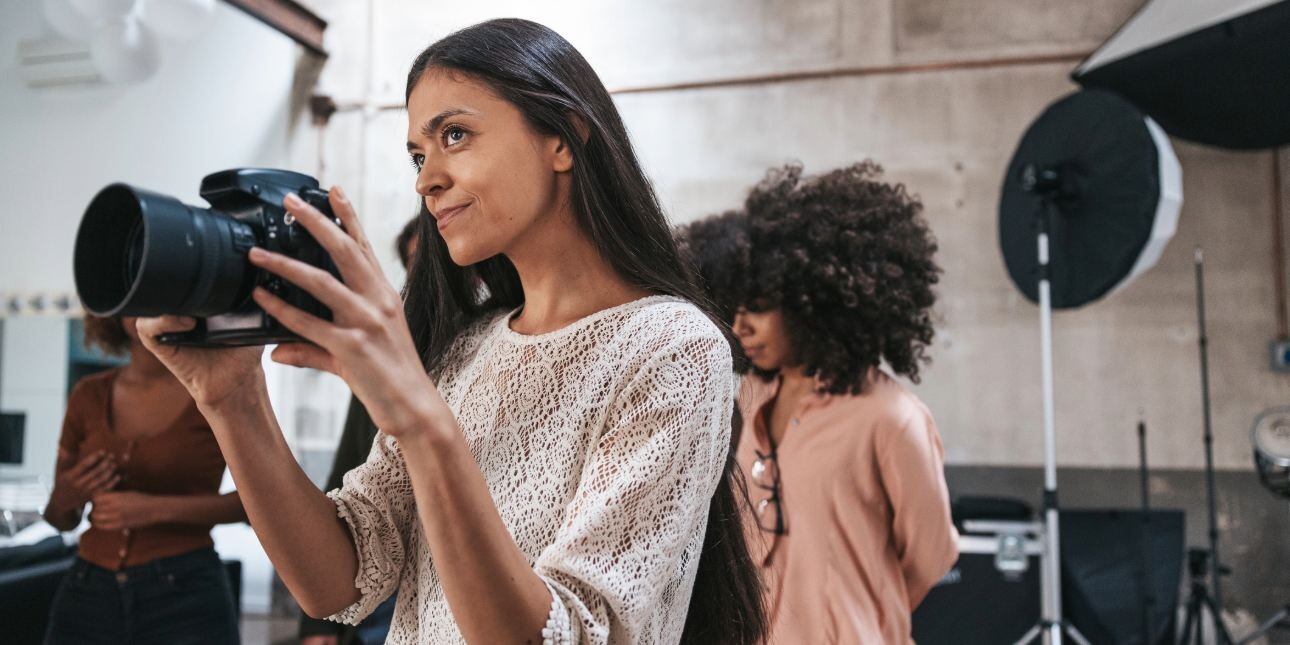
Why effective photography is PR’s most valuable asset
Compelling imagery impacts how stories are told, shared and published. This is why photography remains central to securing editorial coverage.
There is a tendency within PR to focus on the written word: the pitch, the press release, the perfectly timed email. Yet, in practice, it is often the image that determines whether a story is picked up at all.
Editors and journalists operate in an increasingly visual media landscape. Whether online or in print, impactful imagery does more than support a story - it frames and elevates it and, in many cases, justifies its inclusion. Without it, even the most compelling stories risk being overlooked.
I have seen this across both travel and lifestyle accounts. The story may be really interesting yet the supporting imagery is weak, generic or not relevant to the target market and so struggles to gain traction. When pitches are support by distinctive, editorial-quality photography, the same story instantly becomes usable and desirable and infinitely easier to place!
At Dovetail, photography is a core part of our luxury communications strategy.
The shift from documentation to storytelling
There has been a clear shift in expectations as in our world imagery is no longer required simply to document a space, a product or a person – it is expected to tell a story in its own right.
For hospitality, this means moving beyond standard room shots or wide angles. Editors are drawn to images that convey atmosphere, personality and perspective – a moment of light across a table, a sense of scale within a space, or a detail that hints at the subject’s heritage – these are the types of images that may offer appeal to editors.
The same applies across lifestyle sectors. In architecture or design, it is not enough to show a finished project. The visual needs to express the story behind the space – perhaps the materiality and personality of the brand. In luxury retail, it is not just about the product (although I must add that clear, beautifully shot cut-outs will always be worthwhile), it is about also about context and perhaps most important, desirability. It is interesting how often brands forget this simple aspect – your audience has to feel they really want it.
What makes an image editorial
Not all photography is created with editorial use in mind. The difference is often subtle, yet significant. Imagery for marketing and website often needs to be landscape and uncluttered. Images for social media often needs to be portrait and more lifestyle.
Editorial imagery anticipates how a journalist or editor will use it and reflects a sense of narrative within a single frame. It needs to avoid feeling overly staged or looking overtly branded and commercial. Instead, it should align with the visual language of the publications it is targeting – that may be through the use of colour, style, composition, negative space for text, and use of space.
Rather than creating images for owned channels alone, brands need to consider how assets will perform externally. Where might this sit on a page? How might it be cropped? Does it hold attention at first glance?
The same is true of videography, which is increasingly being required for online storytelling and arguably has even more impact. Although a different medium, videography is becoming as essential to support digital PR.
The role of creative direction
Compelling photography rarely happens by chance and is often the result of clear art direction and an understanding of both the brand and the media.
From concept and mood board through to the execution, there needs to be a consistent vision and a coherent style that aligns with the brand’s positioning, while remaining flexible enough to resonate with different titles.
In practice, this usually means producing a suite of assets rather than a single hero image as editors look for choice and require options that suit different formats, from digital features to print spreads. A well-executed shoot anticipates this, capturing a range of moments, orientations and details.
This approach not only increases the likelihood of coverage, it also helps to extend the lifespan of the assets themselves.
Why it matters more than ever
The volume of content produced daily has made selection more competitive. Editors are under pressure to move quickly, often working across multiple platforms and deadlines so from a PR perspective, this is where an opportunity lies.
Effective imagery simplifies decision-making and allows a story to be understood instantly, reduces the need for additional sourcing or commissioning, which is often no longer an option for many publications who have reduced budgets and are under pressure to create content quickly.
The use of AI is seen by many to be a quick fix to this yet, just like the relevance of the authenticity of a brand, it is the same with images. Despite the sophistication of many AI tools, there often is a sense of emotion lacking, and even the best results require a deep understanding of brand identity to perform well. It will be interesting to see how the landscape develops especially as we are already seeing a backlash against ‘perfect’ images, particularly in the luxury market where brands are often keen to communicate a sense of craft and history.
There is also still a need for excellent writing as although the picture is important, it will rarely work without the supporting words. It’s the combination of the copy and imagery that delivers results - just like it does in glossy magazines. I have edited luxury lifestyle magazines for most of my career and am familiar with the challenge of making sure that both are strong and also work together! When they work cohesively, the resulting piece will communicate the story of the brand in a way that feels distinctive and true.
Catherine Peel is director of lifestyle and creative at Dovetail.
More thought leadership
Fake experts, real pressure: what PR and journalism need to fix now
How sustainability claims have become a frontline risk for PR teams
The confidence gap in PR: why it's holding our industry back