

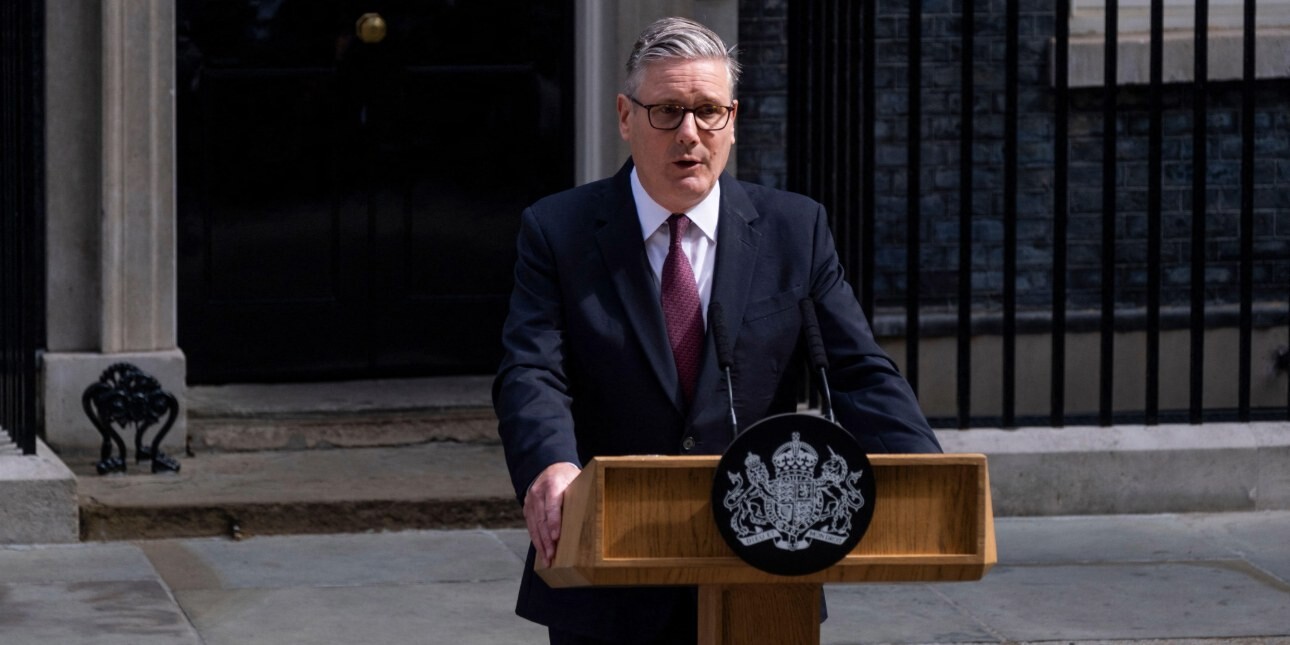
Did Keir Starmer’s communication style lead to his downfall?
Perception is everything? Communications lessons from Keir Starmer's premiership and resignation.
I have no political axe to grind. The prime minister Keir Starmer, is, I believe, an honourable and decent man. He has also demonstrated decisiveness on the world stage, particularly in support of Ukraine. Yet despite winning a landslide election victory two years ago on 4 July, he has faced significant challenges in maintaining public confidence – and now ultimately resignation. Looking from the outside in, and recognising that perception is often as important as reality, what communications lessons can we draw?
A compelling narrative
As a former senior lawyer, many might have expected exceptional powers of advocacy from the prime minister. However, effective leadership communication requires more than presenting a case. It requires a compelling narrative (not just a list of policies) that helps people understand where they are, where they are going and why.
They say that humans need stories to make sense of the world. Long before we could write, we communicated through narrative. Some commentators argue that while Starmer did enough to win an election, his government struggled to communicate a clear and inspiring vision of what success would look like once in office.
The perception among some voters was that the government was too often responding to events rather than shaping them. Fairly or unfairly, that matters. In communications, perception can become reality. When leaders appear to be reacting rather than leading, confidence can quickly ebb away.
Policy and communication
Policy and communication are often intimately entwined. The decision to increase national insurance contributions for employers may have been driven by difficult economic realities but the communications challenge was not successfully overcome. Businesses warned of higher costs, workers feared the impact on jobs and growth, and the government often appeared to be defending the policy rather than explaining a wider economic vision.
Similarly, a series of policy reversals created an impression of uncertainty. U-turns are sometimes unavoidable. However, when they become a recurring feature, voters can begin to question whether there is a clear plan in the first place. In communications terms, consistency is often as important as the policy itself.
The controversy surrounding the winter fuel allowance was another example. Whatever the merits of the decision, the public debate quickly became focused on pensioners losing support rather than the government's wider economic objectives. The narrative wasn’t under ministers’ control and became defined by opponents and commentators.
Effective leadership communications
Leadership itself is perhaps the ultimate form of communication. We are often told that Starmer lacks the charisma of some predecessors. Yet after years of political turbulence, many voters appeared willing to trade charisma for competence and a safe pair of hands.
The challenge is that competence alone is rarely enough. Political leadership requires the ability to bring people with you, whether they are cabinet colleagues, backbench MPs, civil servants or the public. Reports that decision making was tightly controlled by a small group of advisers created a perception of distance and remoteness. Again, whether entirely fair or not, such perceptions can be difficult to overcome once established.
Personnel issues
Personnel issues also played a key role. Constant changes among senior advisers and communications staff inevitably attracted media attention. Frequent departures can create an impression of instability, even when organisations continue to function effectively. In politics, where every development is scrutinised, leadership teams need to project confidence, clarity and consistency.
Trust
Trust is another crucial communications currency. Once questions arise about judgement, transparency or accountability, rebuilding confidence becomes far harder than maintaining it in the first place. The media, social media and political opponents will inevitably fill any communications vacuum.
The final analysis
So was Keir Starmer a poor communicator? That may be too simplistic a conclusion. His government has operated in a rapidly changing world shaped by economic uncertainty, international political instability and an increasingly fragmented media landscape. Today's leaders face intense pressure to deliver results immediately, often before long term policies have had time to take effect.
Perhaps the bigger question is whether any modern political leader can successfully communicate long term change in an age of shrinking attention spans and constant scrutiny. If perception is everything, the challenge for leaders is not simply to govern effectively but to ensure people understand, believe in and feel part of the journey.

Peter Osborne is a former journalist with more than three decades of experience in corporate communications and public affairs, working at the sharp end of contested and high-risk decisions, often involving the delivery of major infrastructure projects in the nuclear and water sectors – where public scrutiny, legal challenge and issues of trust are constant features. He has also worked in the public sector, including the police and probation services, as well as for third-sector organisations. His professional background informs this blog.