

Crisis communication and the capability v character conundrum
Three members of the CIPR Crisis Communications Network reflect on five years of promoting best practice and the lessons we can learn when crisis hits.

Chris Tucker, co-chair of the CIPR Crisis Communications Network, writes … Crisis communication has its roots in several older disciplines – public relations, journalism, organisational management, psychology and emergency management. It did not emerge at a single moment or from one founding theorist. Rather, it developed as organisations increasingly recognised that how they communicate during a crisis can be as consequential as how they manage the crisis itself.
From reactive exercise to strategic function
Perhaps the most significant shift we have seen in recent years – certainly since the formation of the CIPR Crisis Communications Network five years ago - is from seeing crisis communication as a reactive exercise in media handling to understanding it as a strategic organisational function. Professional crisis communicators have an invaluable role in helping organisations recognise the risks they run and how those risks to reputation can be mitigated and managed.
This is a theme we at the CIPR Crisis Communications Network had the opportunity to explore in one of our popular one on one In Conversation formats back in 2025 with Rupert Younger, founder and director of Oxford University’s Centre for Corporate Reputation. Rupert introduced us to his work on what he calls the Character-Capability Axis.
Organisations have a capability reputation that is determined by their ability to do well what they exist to do, for example, a car company making excellent cars, but they also have a character… “how you show up” as determined by organisational culture and organisational character. Looking at organisations through these two lenses of capability and character helps us understand where the potential for crisis may be and better understand the expectations of stakeholders.
Ryanair: criticised yet valued
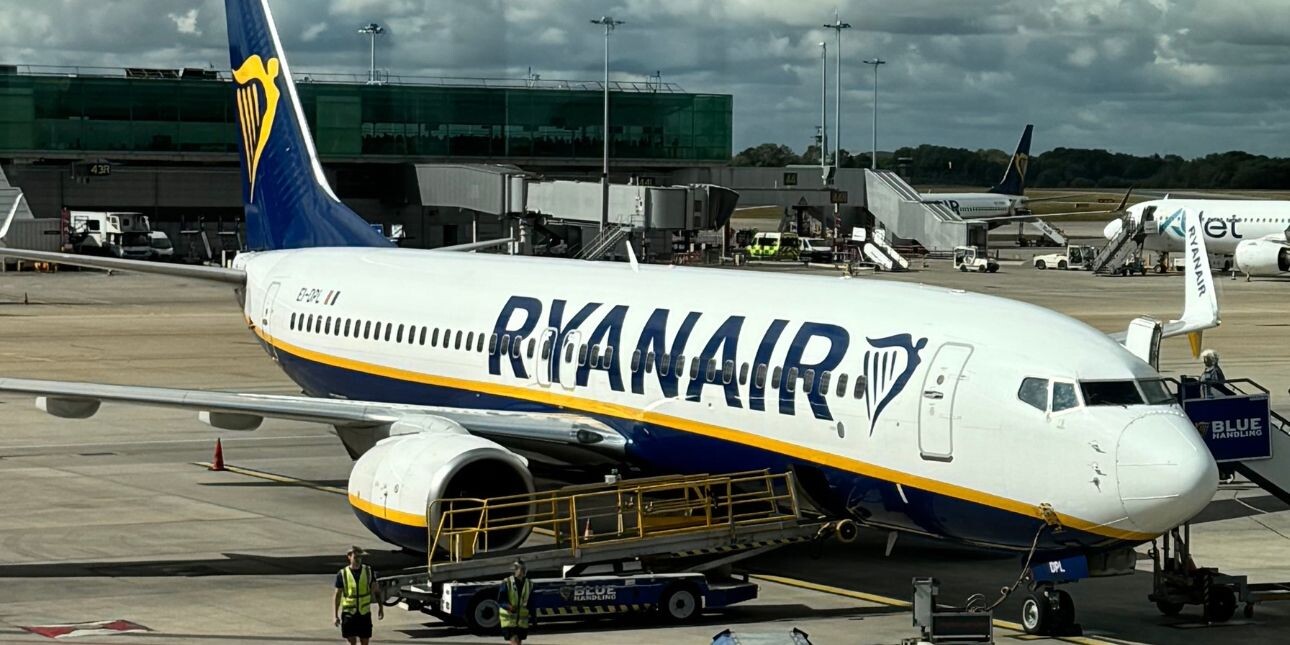
As crisis communicators we are often challenged by brands that emerge from crisis after crisis seemingly unscathed. Ryanair is an obvious example. Ryanair is often criticised for hidden or additional charges, poor customer service, rigid policies and difficulties obtaining refunds or support during disruption. Its handling of delays and cancellations, impersonal communication and confrontational approach to complaints have also attracted negative attention.
Yet Ryanair is one of Europe’s most successful airlines. In the financial year ending March 2026, it carried a record 208.4 million passengers, generated €15.54bn in revenue and reported an operating profit of €2.37bn. It serves approximately 235 airports across Europe, with more than 3,600 daily flights. Clearly its many self-inflicted reputational challenges have not impacted its success. Rupert’s thinking helped us understand why.
Ryanair has a long-standing record of technical capability built up over many years. Millions of passengers value its low fares and extensive European network. It has made holidays more affordable for many and business travel easier. Those using Ryanair are well aware of what we can call its issues around its character but on the whole it is capability that has ensured its continuing success.
How to cause long-lasting damage to your reputation

Rod Cartwright, special adviser to the CIPR Crisis Communications Network, writes … It is rare for the roots of an acute issue or full-blown crisis to stem entirely from by one or other of these two crucial vectors of capability and character. After all, functional or operational failings that in no way reflect underlying leadership decision-making or organisational culture are rare. Just as we rarely see character- and culture-led scandals that have absolutely no basis in operational factors.
However, there is growing qualitative evidence and quantitative research pointing to the notion that if you want to cause really deep, long-lasting damage to your reputation and key relationships, get yourself embroiled in a character- and culture-centred crisis.
This is a point made eloquently by Rupert Younger and his co-author, David Waller in their 2018 book The Reputation Game: The Art of Changing How People See You. Their finding have been echoed in more recent research by Australian consultancy, SenateSHJ, in their Crisis Index300 report.
Analysing the financial impacts of over 300 listed company crises globally over the past 44 years (using data from 27 stock exchanges and across 32 industry sectors), their data pointed to an average share price impact of over 35%, EPS falling 68.3% and companies taking 425 days for their share price to return to pre-crisis levels.
And the types of crisis that did the most profound, long-lasting organisational damage? “Mismanagement and white-collar crime”, with cyber-related incidents sitting at the other end of the spectrum.
Character-led scandals
Anyone who regularly reads PRovoke Media's Crisis Review (previously annual, now quarterly) will have seen a growing predominance of character-led scandals in their coverage.
The most recent Q3 review (from 24 October), takes in crises ranging from the Bernard Arnault-centred furore at LVMH and golf brand, Calloway’s, spat with Good Good Golf – over a controversial ad seen as belittling violence against women – to the backlash Neutrogena faced for its reaction to the death of brand ambassador, actor Hayden Panettiere and the challenges facing Sydney Sweeney for her barely-clad ad for sports prediction platform Novig.
Perhaps the most painfully stand-out example from the past five years was the Spanish FA's Luis Rubiales 'Disasterclass', about which I wrote at length in Influence in September 2023. However, the dynamics which permeated that crisis are far less rare than many organisations are willing to acknowledge, with character-led scandals an often overlooked and under prepared-for form of reputational risk.
The crisis communications playbook

Felix Östman, head of events at the CIPR Crisis Communications Network, writes … So how best to handle a character-led crisis? On a Thursday evening in 2016, the Swedish minister Aida Hadžialić drove from Sweden to Denmark to attend a concert. She had two glasses of wine early in the evening, watched the concert, and a couple of hours later drove back to Sweden.
Upon re-entering Sweden, she was pulled over by the police for a routine breathalyser test. Her blood alcohol concentration registered right at the legal limit of 0.2 per mile, and she was charged with drunk driving. In Denmark, the legal limit is higher, so her driving there had been completely lawful.
Are two glasses of wine and a subsequent drive hours later an issue that affects your capability as a politician? Or is it a flaw in character? Can someone redeem themselves?
Hadžialić’s response was taken straight from a crisis communications playbook. Instead of making excuses or arguing that she was just on the limit, she took full accountability and simply said, "I'm sorry."
Early the next morning, before the offense had reached the press, she called a press conference: “I understand that many people are disappointed in me, and I am furious with myself, and above all, I am deeply remorseful.
“I was brought up to take responsibility for my actions, and I want to do that here as well. That is why I have notified the Prime Minister that I am stepping down from government.”
Taking control of a crisis
Through her swift action, she took control of the crisis narrative. Instead of being blamed for her offense, she was praised for her accountability.
Although she stepped down from her ministerial role, she continued working for the party. A few years later, she returned as the leader of the regional council in Region Stockholm.
While strong capability can help an organisation weather repeated reputational storms, a crisis rooted in character, culture or leadership can be far harder to recover from. But, as Hadžialić demonstrated, the way an individual or organisation responds can make all the difference.
For crisis communicators, the lesson is clear: we must look beyond operational risks and media response plans to understand the character of the organisations we represent – their values, behaviours, leadership and the expectations they create among stakeholders. As the CIPR Crisis Communications Network reflects on five years of promoting best practice, perhaps one of the most important lessons is that effective crisis communication begins long before a crisis hits. It starts with helping organisations understand not just what they do, but who they are.